
Views: 0 Author: Site Editor Publish Time: 2026-10-19 Origin: Site


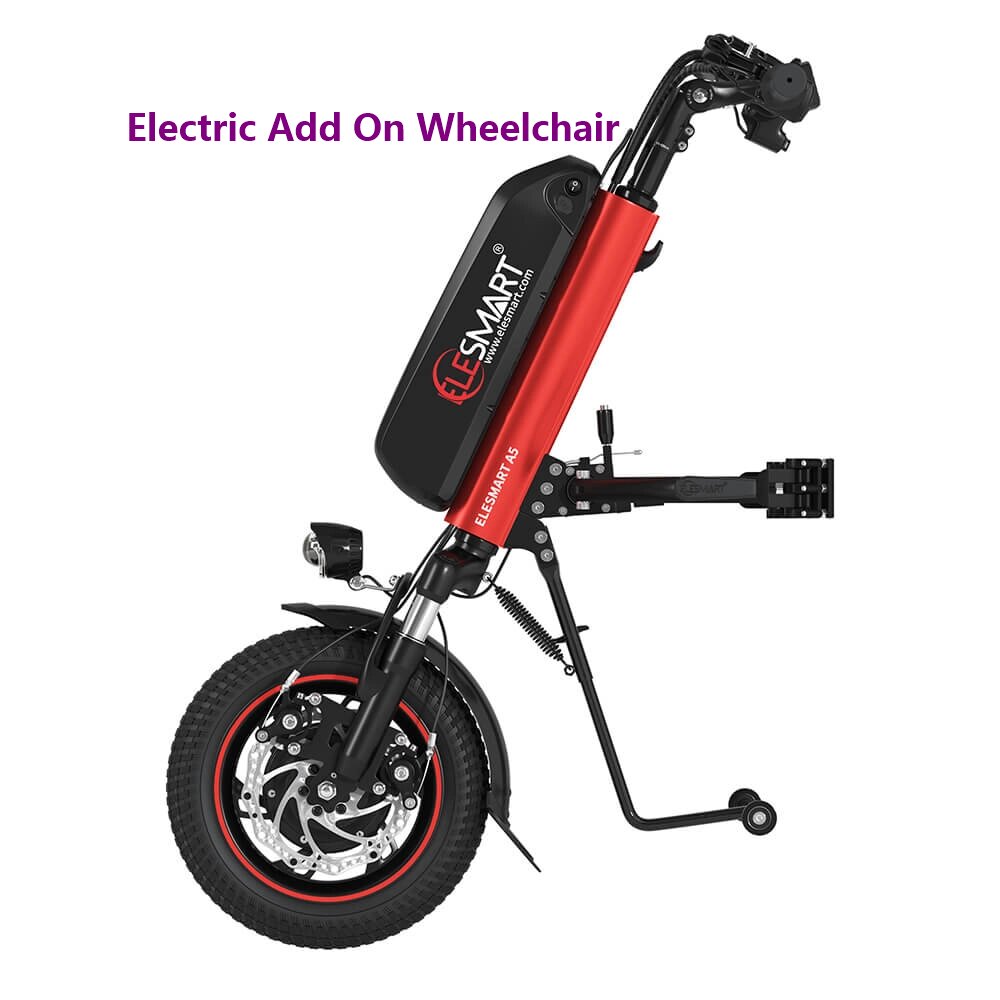
Manual wheelchairs offer independence, but they demand physical effort with every journey. For many users, the arms and shoulders bear the strain of daily propulsion — to work, to the shops, to visit family. An electric add on wheelchair solves this problem elegantly: it is a powered unit that attaches to an existing manual wheelchair, transforming it into a powered mobility device when needed and detaching just as quickly when it is not.
This guide explains how electric add-ons work, what separates a reliable unit from a compromise, how customization serves different users, and what wholesale buyers and distributors should look for in a manufacturing partner.
An electric add-on wheelchair system typically consists of a motorized front wheel, a battery pack, a steering column with handlebars, and a control interface. The unit mounts to the front of a manual wheelchair, lifting the small front casters slightly off the ground so the powered wheel takes over propulsion and steering. The user controls speed with a throttle or lever and brakes with a dedicated control, much like riding a bicycle.
The key advantage is modularity. Users keep the wheelchair that is already fitted to their body and lifestyle — an important consideration, since a well-matched manual chair is a personal item, not a generic product. The add-on provides power exactly when it helps: long distances, inclines, rough surfaces, or days when fatigue makes manual propulsion difficult.
Compared with purchasing a full electric wheelchair, an add-on is generally more affordable, lighter to transport, and easier to store. It also preserves the manual chair's usability for situations where powered assistance is unnecessary or inconvenient.
Motor performance and terrain handling. The motor must deliver enough torque for the user's weight and typical environment. Flat urban pavements demand less than gravel paths, park trails, or gentle hills. Buyers should match motor output to real-world use rather than marketing claims.
Battery capacity and range. Range depends on battery size, motor efficiency, terrain, and user weight. Removable lithium batteries simplify charging and allow spares for longer trips. Safety-certified battery cells are non-negotiable.
Weight and mounting ease. A heavier unit is harder to lift and attach. Quick-release, tool-free mounting systems make daily use practical, especially for users with limited strength or dexterity.
Braking and stability. Reliable brakes, speed limiting, and reverse functionality are essential safety features. A stable mounting interface that distributes load correctly protects both the chair frame and the rider.
Ergonomics and controls. Adjustable handlebar height, intuitive throttles, and clear displays reduce the learning curve and improve comfort on longer journeys.
Customization is where electric add-on systems prove their value to dealers, clinics, and distributors. A capable factory can adapt:
Mounting brackets for different frame types, tube diameters, and wheelchair widths
Battery options ranging from short daily commutes to full-day excursions
Motor variants tuned for flat urban use or demanding terrain
Control configurations for users with limited hand function
Branding and color options for private-label programs
This flexibility lets a single product family serve a broad customer base, which is far more efficient for inventory management than stocking many separate models.
Buyers evaluating suppliers for electric add-on wheelchairs should assess several factors:
Industry experience. A manufacturer that has focused on mobility equipment for more than a decade understands the reliability standards the medical field requires. Longevity signals stability, process maturity, and accumulated engineering knowledge.
Quality control. Motor testing, battery safety verification, load testing, and final inspection routines protect end users and safeguard the buyer's reputation.
Production capacity and lead times. Reliable delivery schedules matter for dealers managing seasonal demand and for distributors maintaining stock across markets.
After-sales support. Spare parts availability, technical documentation, and responsive communication reduce service headaches over the product's life.
Global distribution support. Suppliers with local inventory arrangements or warehouse networks can shorten delivery times and simplify logistics for international wholesale buyers.
Clarify intended use before purchase — daily commuting, recreational riding, travel, or indoor maneuvering. Confirm compatibility with the specific wheelchair model. Ask for real-world range data rather than laboratory figures alone. Review warranty terms carefully, particularly for the motor and battery, which are the highest-value components. And consider whether the supplier offers customization, since a tailored configuration often serves users better than a one-size-fits-all unit.
An electric add on wheelchair is one of the most practical mobility upgrades available today. It extends the capability of a familiar manual chair, reduces physical strain, and opens up longer journeys and more varied terrain — all without the cost and bulk of a dedicated electric wheelchair.
Elesmart has specialized in wheelchair power attachments and electric handbikes since 2011, backed by a technical team with decades of experience in the medical equipment industry. The company supports wholesale buyers, customization requests, and factory-direct partnerships worldwide.
Contact us to discuss your requirements:
Email: info@elesmart.com
Mobile: +86 13685249056


