
Views: 0 Author: Site Editor Publish Time: 2026-08-07 Origin: Site


Electric Handcycle vs Manual Handcycle: Which One Is Right for You?
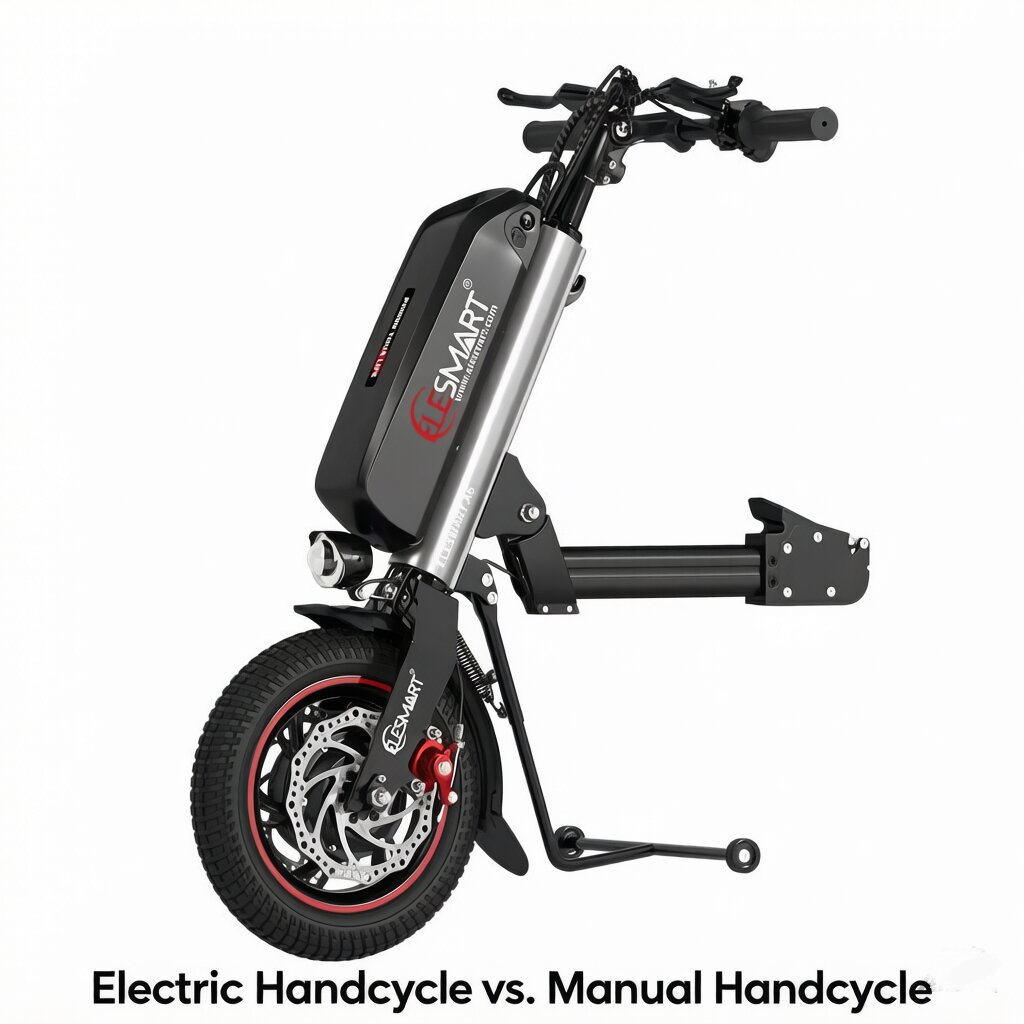
Handcycles—also known as handbikes—have transformed the way wheelchair users and individuals with lower-limb disabilities experience mobility, recreation, and fitness. Whether you're commuting through the city, exploring nature trails, or simply looking to stay active, a handcycle can open up a world of possibilities. But with both electric and manual options available, how do you decide which is the better fit?
The answer depends on your lifestyle, physical capabilities, budget, and personal goals. Let's break down the key differences between electric and manual handcycles so you can make an informed choice.
What Is a Manual Handcycle?
A manual handcycle is a human-powered vehicle propelled exclusively by the rider's arms and upper body. Riders sit in a recumbent position and turn hand cranks connected to the drivetrain, which drives the front or rear wheel. Most handcycles are tricycle in form, typically featuring two rear wheels and one steerable front wheel.
Manual handcycles come in several configurations, including attachable models that clip onto the front of an existing manual wheelchair, as well as standalone sport and recreational models. Attachable manual handcycles are the easiest and most affordable way to start handcycling—they attach and detach in seconds, allowing you to keep your own custom-fitted wheelchair.
What Is an Electric Handcycle?
An electric handcycle, also known as an electric-assist handcycle, features an integrated motor that assists with arm cranking—similar to an e-bike. The motor provides power assistance during uphill rides, long-distance travel, or fatigue-inducing conditions, extending usability to individuals with limited strength or stamina.
Electric handcycles can be purely throttle-operated (requiring no pedaling at all) or hybrid models that combine manual cranking with electric assistance. Most attachable electric handcycles convert a manual wheelchair into an electric tricycle, with ranges typically between 30 and 80 km per charge and speeds up to 25–32 km/h.
Key Differences Between Electric and Manual Handcycles
Propulsion and Effort
The most fundamental difference is how each is powered. A manual handcycle relies entirely on your upper body strength. You propel yourself forward by turning the hand cranks, which engages your shoulders, chest, back, biceps, and triceps. This makes manual handcycling an excellent form of cardiovascular exercise and upper-body conditioning.
An electric handcycle, by contrast, uses a motor to do much of the work. You can choose to crank manually with assistance, or in some models, simply use a throttle to move without any physical effort. This reduces strain and allows you to cover longer distances without exhaustion.
Range and Terrain Capability
Manual handcycles are limited by the rider's endurance. While experienced users can cover significant distances, fatigue inevitably sets in—especially on hills or rough terrain. Electric handcycles, with their motor assistance, enable users to tackle steep slopes, uneven pavements, and long recreational routes that would normally be out of reach. As one adaptive athlete noted, electric assistance "considerably opens up terrain and distance".
Health and Fitness Benefits
For those seeking physical conditioning, manual handcycles offer a superior workout. Regular handcycling improves physical capacity, cardiovascular fitness, and upper-body strength. The motion is also different from wheelchair pushing, which reduces repetitive strain on the shoulders.
Electric handcycles still provide some exercise—especially hybrid models that combine manual cranking with assistance—but the workout is less intense. For users with limited upper-body strength or those recovering from injury, electric handcycles offer a way to stay active without overexertion.
Cost and Affordability
Manual handcycles are significantly more affordable. Their simpler mechanical construction keeps manufacturing costs low, making them accessible to a wider range of users. Attachable manual handcycles typically start around $2,000.
Electric handcycles command a premium due to their motors, batteries, and electronic control systems. Prices for electric-assist models generally range from $4,000 to $12,000. The battery is the most expensive component, with lithium batteries typically lasting 3–5 years or 500–800 charge cycles before needing replacement.
Weight and Portability
Manual handcycles are lighter and easier to transport. Without a motor and battery, they weigh considerably less and can be folded or detached for compact storage. Electric handcycles are heavier due to the motor and battery—typically adding 8–10 kg or more. While many electric models are still detachable and portable, they require more effort to lift and load into a vehicle.
Maintenance and Reliability
Manual handcycles have a simple mechanical structure with minimal maintenance requirements. Aside from occasional tire inflation and chain lubrication, they can last for years with basic care.
Electric handcycles require more attention. In addition to routine mechanical maintenance, you must care for the battery, motor, and electrical systems. Electrical issues often require specialized service, as not every workshop can handle e-bike repairs.
Who Should Choose a Manual Handcycle?
A manual handcycle is the right choice if:
You want a full upper-body workout and cardiovascular training
You're on a tighter budget and want a more affordable option
You prefer simplicity and low maintenance
You have good upper-body strength and endurance
You primarily ride on flat terrain or for shorter distances
Manual handcycles are ideal for fitness enthusiasts, recreational riders, and those who value the independence of human-powered mobility.
Who Should Choose an Electric Handcycle?
An electric handcycle is the better fit if:
You have limited upper-body strength or stamina
You want to cover longer distances without fatigue
You need to tackle hills, slopes, or rough terrain
You use your handcycle for daily commuting or errands
You want the flexibility to ride with minimal physical effort when needed
Electric handcycles are perfect for users who want to expand their range, explore new places, and maintain mobility without overexertion.
The Hybrid Option
For those who want the best of both worlds, hybrid handcycles combine manual propulsion with electric assistance. You can crank manually when you want exercise and activate the motor when you need help with hills or long distances. This flexibility makes hybrids an increasingly popular choice.
Making Your Decision
The choice between an electric and manual handcycle ultimately comes down to your personal needs and goals. If fitness and affordability are your priorities, a manual handcycle is an excellent choice. If range, convenience, and accessibility are more important, an electric handcycle will serve you better.
Many users find that starting with a manual handcycle and later upgrading to electric—or vice versa—allows them to discover what works best for their lifestyle. The global handcycle market continues to grow rapidly, with both manual and electric models seeing increasing demand as awareness of adaptive mobility expands.
Why Choose ELESMART?
At ELESMART, we understand that mobility is about freedom, independence, and quality of life. Our electric handcycle attachments are designed to transform your manual wheelchair into a powerful, versatile mobility device. With features like powerful motors, long-lasting lithium batteries, intuitive controls, and lightweight designs, ELESMART handcycles deliver performance, comfort, and reliability.
Compatible with almost all standard manual wheelchairs, our handcycles attach quickly and securely—giving you the freedom to explore without limits. Whether you're commuting to work, running daily errands, or embarking on a weekend adventure, ELESMART is your partner in mobility.
Contact Us
Ready to learn more about how an electric handcycle can transform your mobility? Reach out to us today:
Email: info@elesmart.com
Mobile: +86 13685249056
Experience the freedom of electric mobility with ELESMART—where innovation meets independence.


