
Views: 0 Author: Site Editor Publish Time: 2026-09-30 Origin: Site


Manual Wheelchair with Solid Tires vs Pneumatic: A Complete Buyer's Guide
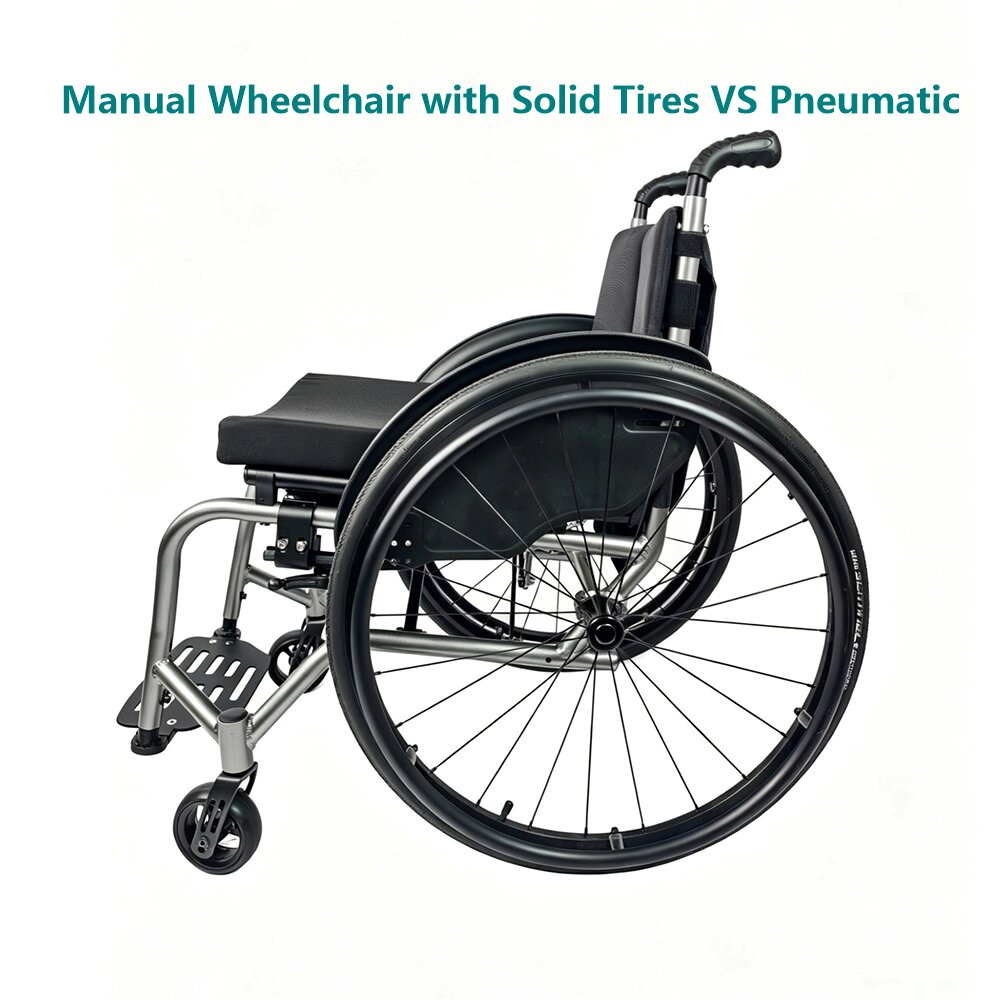
When choosing a manual wheelchair, most buyers focus on the frame, the seat, and the weight. But one detail that has a huge impact on daily comfort, maintenance, and long-term cost is often overlooked: the tires. Two main options dominate the market — solid tires and pneumatic (air-filled) tires. Each has distinct advantages, and the right choice depends on how the wheelchair will be used, where it will be used, and who will maintain it.
For wholesalers, distributors, and custom project buyers, understanding the difference between solid and pneumatic tires is essential. It helps you select products that match your customers' needs, reduce after-sales complaints, and build a stronger reputation in your market.
What Are Solid Tires?
Solid tires are made from durable rubber or polyurethane and contain no air. They are molded into a single piece that fits directly onto the wheel rim. Because there is no inner tube or air pressure involved, solid tires cannot go flat.
This makes them extremely low-maintenance. Users never need to check pressure, pump air, or repair punctures. For people who use their wheelchair indoors, in hospitals, in care facilities, or on smooth paved surfaces, solid tires are a practical and reliable choice. They are also ideal for institutional buyers who manage large fleets of wheelchairs and want to minimize maintenance costs.
The main drawback of solid tires is a firmer ride. Because there is no air cushion, vibrations from rough ground are transmitted more directly to the user. On uneven sidewalks, gravel, or cobblestones, the ride can feel harsh. Solid tires also tend to have slightly less grip on wet or slippery surfaces compared to pneumatic tires.
What Are Pneumatic Tires?
Pneumatic tires work like bicycle tires. They contain an inner tube filled with air, which provides natural shock absorption. This air cushion creates a noticeably smoother and more comfortable ride, especially on uneven or rough terrain.
For users who travel outdoors frequently, navigate cracked sidewalks, or move across grass and gravel, pneumatic tires offer better comfort and traction. The softer contact with the ground also reduces vibration, which can help users who experience pain or fatigue during long periods of sitting.
The downside is maintenance. Pneumatic tires can lose air over time and are vulnerable to punctures from nails, glass, or thorns. Users need to check tire pressure regularly and be prepared for occasional repairs or replacements. For someone who is not able to manage this independently, a pneumatic tire can become a source of frustration.
Comfort vs Convenience
The core trade-off is simple: pneumatic tires offer better comfort, while solid tires offer better convenience. If comfort and terrain handling are the top priorities, pneumatic is the better choice. If reliability and zero maintenance matter most, solid tires win.
Many experienced users actually prefer a combination — pneumatic tires on the rear wheels for comfort and propulsion, and solid tires on the front casters for durability and easy rolling. This hybrid setup is common in higher-quality manual wheelchairs and is worth considering when you specify products for your market.
Cost and Longevity
Solid tires usually cost less over their lifetime because they rarely need replacement and require no maintenance. Pneumatic tires may have a lower upfront cost in some cases, but they need inner tubes, pumps, and occasional repairs. Over several years, the total cost of ownership can be higher.
However, pneumatic tires can be replaced relatively easily and cheaply when they wear out, while solid tires sometimes require replacing the entire wheel assembly depending on the design. The best approach is to evaluate both upfront price and long-term service costs.
Choosing the Right Tire for Your Customers
Consider the user's environment first. Indoor and institutional users benefit most from solid tires. Active outdoor users and those who travel on rough surfaces benefit from pneumatic tires. Consider the user's ability to maintain the chair. Someone who cannot easily pump or repair a tire should avoid pneumatic options. Finally, consider your market positioning. Budget-focused markets often prefer solid tires, while premium and active-lifestyle markets lean toward pneumatic.
Wholesale, Custom, and Factory Support
As a manufacturer with years of experience in mobility equipment, ELESMART supports wholesale orders, custom specifications, and factory-direct supply. We can help you select the right tire type, wheel size, and configuration for your target customers. Whether you need solid tires for hospital fleets, pneumatic tires for outdoor users, or a mixed setup for premium models, we can customize the product to match your requirements.
We also work with distributors and brand owners who need consistent quality, reliable lead times, and flexible order quantities. Our team can advise on the most suitable options for your region, climate, and customer profile.
For wholesale pricing, customization details, or partnership inquiries, please contact us:
Email: info@elesmart.com
Mobile: +86 13685249056
Final Thoughts
Solid tires and pneumatic tires each solve different problems. Solid tires are durable, maintenance-free, and ideal for smooth indoor environments. Pneumatic tires are comfortable, absorb shock, and perform better on rough outdoor terrain. Neither is universally better — the right choice depends on the user and the use case.
For buyers and wholesalers, offering both options gives your customers flexibility and shows that you understand their real needs. With the right manufacturing partner, you can build a product range that covers every segment of the market and keeps your customers coming back.
Contact ELESMART today to discuss your manual wheelchair tire requirements and explore wholesale and custom opportunities.


