
Views: 0 Author: Site Editor Publish Time: 2026-07-07 Origin: Site


For manual wheelchair users, every push matters. Whether you are navigating city streets, tackling a steep ramp, or simply trying to keep up with daily life, the physical effort required can be exhausting. Power assist wheels for manual wheelchairs have emerged as one of the most transformative innovations in mobility technology, bridging the gap between full manual propulsion and bulky power wheelchairs.
Power assist wheels are motorized wheels that replace the standard rear wheels on a manual wheelchair. These battery-powered wheels sense your pushes on the handrim and provide an electric boost, amplifying your effort so you can travel farther with less strain. Unlike full power wheelchairs, power assist wheels preserve the look, control, and functionality of a manual wheelchair while adding motorized support when you need it most.
The concept is simple but powerful: you still propel your chair manually, but the motors kick in to multiply your pushing force. Some systems can increase the force you apply to the handrims by up to four times, making hills, long distances, and rough terrain significantly more manageable.
One of the most significant advantages of power assist wheels is the dramatic reduction in physical exertion. Research shows that power assist devices can reduce energy expenditure by as much as 45%. For users who rely on manual wheelchairs for daily mobility, this energy saving translates directly into more stamina for work, social activities, and simply enjoying life. One study found that 80% of subjects reported decreased fatigue while using power assist.
Manual wheelchair users are at high risk for repetitive strain injuries, particularly in the shoulders, wrists, and elbows. The constant pushing and braking required for daily propulsion can lead to long-term joint damage. Power assist wheels reduce the biomechanical stress on these vulnerable areas, helping prevent or delay the onset of these secondary injuries.
Power assist wheels enable users to travel farther and more frequently than with a standard manual chair. Users report being able to go longer distances, take on inclines, and travel across uneven terrain with ease. This expanded mobility opens up opportunities that might otherwise be out of reach—whether it is a longer commute, an outdoor adventure, or simply running errands without arriving exhausted.
Unlike power wheelchairs, power assist wheels allow you to maintain the active lifestyle and fitness benefits that come with self-propulsion. You still push, you still steer, and you still engage your upper body. The difference is that you are not fighting gravity and resistance alone. When you do not need the assistance, many systems allow you to disengage the motors and roll like a standard manual wheelchair.
Most power assist wheels use pushrim-activated technology. Sensors in the wheels detect when you apply force to the handrims and activate the motors proportionally. The harder you push, the more assistance you receive—creating a natural, intuitive experience that feels like you are simply stronger, not like a machine is doing the work for you.
Modern power assist wheels typically feature brushless motors, which offer higher energy efficiency and longer lifespan compared to older brushed motor designs. Lithium-ion batteries provide reliable power with quick recharging times. Some models feature quick-release batteries that can be swapped out for extended range.
Advanced power assist systems come with features designed to enhance safety and usability. Rollback prevention prevents the chair from rolling backward on inclines, while downhill speed control ensures smooth, controlled descents. These features require zero programming and work automatically.
Hub-mounted systems integrate motors and batteries directly into the wheels. They replace your existing rear wheels and are activated when you push the handrims. These systems offer seamless, every-push assistance and can be fully customized for speed, boost, and slope handling.
Rear-mounted systems attach to the wheelchair axle or frame. They are generally lighter than hub-mounted options and can be easily removed for transport. These systems provide power on demand and disengage to behave like a manual chair when not in use.
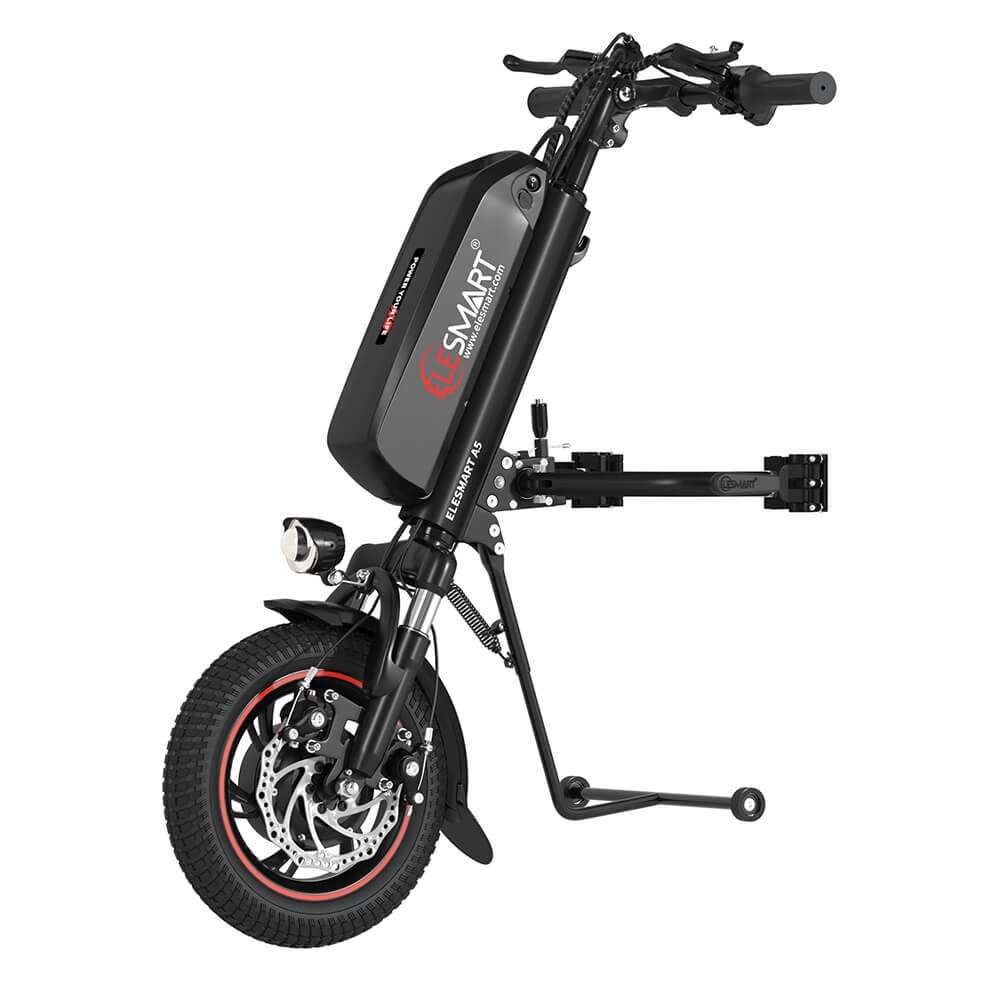
Front-mounted units attach to the front of the wheelchair, lifting the casters and converting the chair into a trike-style setup. These are particularly effective for outdoor use, handling rough terrain, grass, and curbs with ease.
Power assist wheels are ideal for a wide range of users:
Daily commuters who travel moderate distances on flat urban terrain
Users with limited upper body strength who need assistance with inclines and long distances
Active individuals who want to maintain the fitness benefits of manual propulsion while reducing fatigue
Older adults who may be experiencing age-related strength decline
Anyone who wants to reduce the risk of shoulder and wrist injuries
Power assist wheels add weight to your chair—typically 13 to 22 pounds per wheel. However, many modern systems are significantly lighter than earlier models. Consider how you will transport the wheels when not in use and whether quick-release mechanisms are important for your lifestyle.
Range varies significantly between models, typically from 9 to 25 kilometers depending on terrain, user weight, and settings. Some systems offer swappable batteries, allowing you to carry spares for extended trips.
Most power assist wheels can be fitted to virtually any lightweight or standard wheelchair without the need for additional parts or modifications. However, it is always important to verify compatibility with your specific chair model.
While power assist wheels excel outdoors and on flat surfaces, some users find them less maneuverable in tight indoor spaces. Consider your primary use environment when making a decision.
The power assist market is growing rapidly. The global wheelchair market is projected to grow at a CAGR of 6.5% to 8.5%, with power-assist add-ons representing one of the fastest-growing segments. Manufacturers continue to innovate with lighter materials, longer battery life, and more intuitive control systems.
As the technology matures, power assist wheels are becoming more accessible, more affordable, and more capable. For millions of manual wheelchair users around the world, these devices represent not just a convenience but a gateway to greater independence, health, and quality of life.
For more information about power assist wheels and other mobility solutions, contact Elesmart:
Email: info@elesmart.com
Mobile: +86 13685249056


