
Views: 0 Author: Site Editor Publish Time: 2026-07-27 Origin: Site


Power Handbike for Rough Terrain: Conquer the Outdoors with Unstoppable Confidence
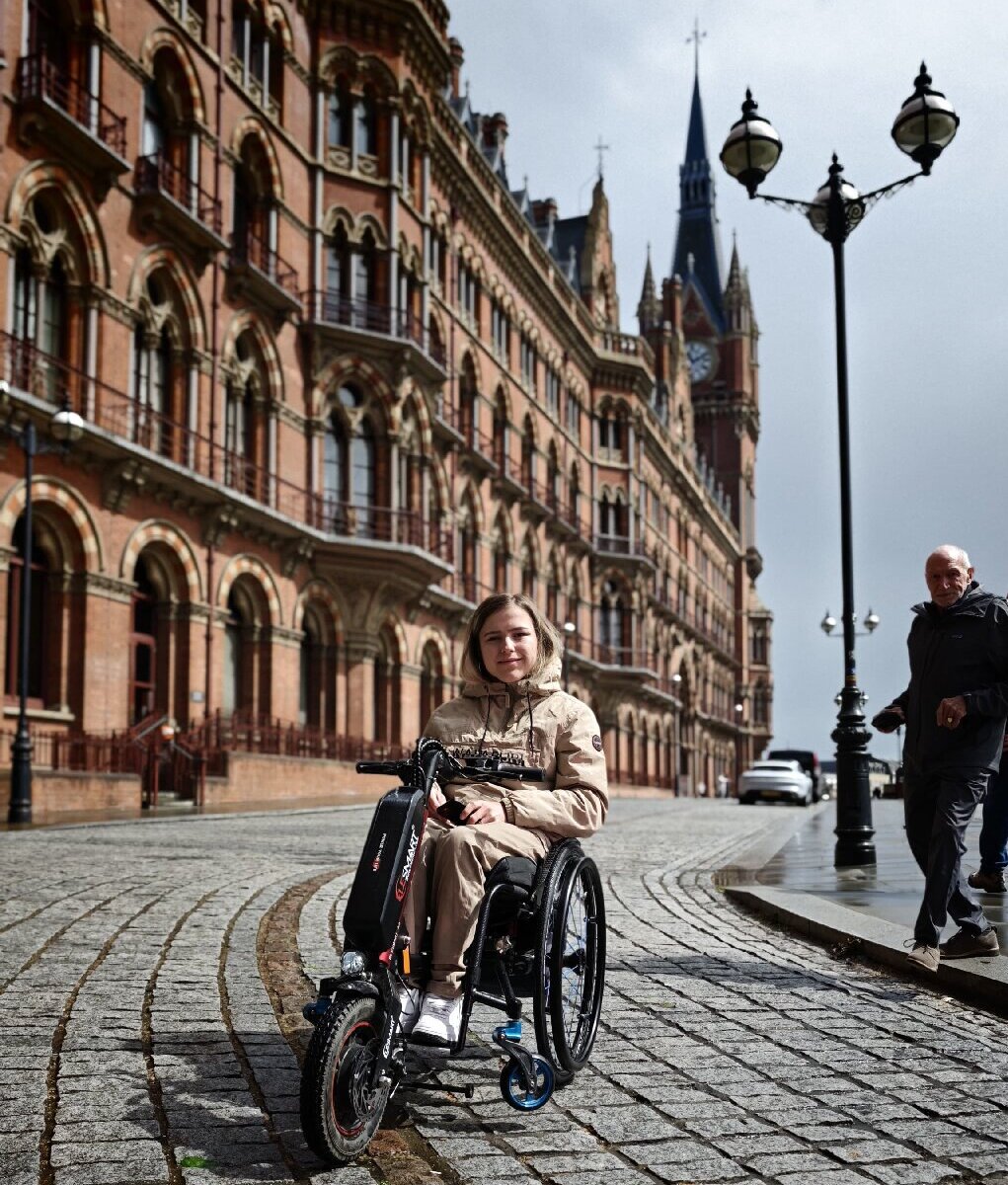
For wheelchair users who crave adventure, the open road is not enough—sometimes the real call comes from winding forest trails, rocky mountain paths, coastal dunes, or snowy backcountry routes. Yet, traditional manual wheelchairs and even standard handbikes struggle when the pavement ends and the terrain turns treacherous. Slippery mud, loose gravel, steep inclines, and deep ruts can quickly turn an exhilarating excursion into a frustrating struggle. This is where a power handbike for rough terrain becomes an essential companion—a rugged, electrically‑assisted machine engineered to take you where few mobility devices have gone before.
A power handbike is a three‑wheeled, recumbent cycle propelled by arm cranking, augmented by an electric motor that delivers on‑demand assistance. But the “rough terrain” variant is no ordinary handbike. It is built with heavy‑duty components: oversized, knobby tires for maximum grip; a robust suspension system (front and rear) to absorb shocks from rocks and roots; a powerful motor (often 500W or more) with high torque for climbing steep gradients; and a durable frame that can withstand the twists and jolts of off‑road riding. The battery is typically large‑capacity (500Wh‑1000Wh) to ensure extended range even in demanding conditions, and the control system allows fine‑tuning of power output to match the terrain’s difficulty.
Unlike standard electric handbikes that are designed for smooth city streets or gentle bike paths, the rough‑terrain model is a purpose‑built off‑road vehicle. It gives users the freedom to explore nature reserves, mountain trails, and countryside lanes that were previously inaccessible, opening up a world of recreational and therapeutic possibilities.
1. Overcoming Natural Obstacles with Ease
Rough terrain presents challenges that require more than just arm strength. Steep hills demand sustained torque; loose surfaces need traction control; and uneven ground calls for shock absorption. The electric motor provides the extra push needed to crest a hill without exhausting your shoulders. Some models feature a “torque‑sensing” system that automatically adjusts assistance based on how hard you are cranking, delivering a natural feel while ensuring you never stall halfway up a slope. With a low‑gear range and intelligent power management, even the steepest gravel roads become manageable.
2. Stability and Safety on Unpredictable Ground
Off‑road handbikes are designed with a wider track and a lower centre of gravity than road‑oriented models, which significantly reduces the risk of tipping. The suspension—often with adjustable damping—keeps all three wheels in contact with the ground, maintaining traction even when crossing tree roots or washboard surfaces. Hydraulic disc brakes provide powerful, modulated stopping power, allowing you to descend confidently. Many rugged handbikes also include a parking brake and an anti‑rollback feature for hill starts, giving you peace of mind when pausing on an incline.
3. Extended Range for Long‑Day Excursions
Nature trails are rarely short; a loop through a national park can span 20‑30 kilometres or more. The high‑capacity battery of a rough‑terrain power handbike ensures that you can complete your journey without range anxiety. With a range of up to 60 kilometres under moderate assistance, you can plan full‑day trips. Removable batteries make it easy to swap in a spare or recharge at a campsite. Some models even support fast charging, so a lunch break can top up enough power for the afternoon stretch.
4. Health Benefits Amplified by Adventure
Exercising in nature has well‑documented psychological benefits—reduced stress, improved mood, and enhanced cognitive function. Combining the aerobic workout of arm cranking with the thrill of off‑road exploration doubles these advantages. The electric assistance allows you to tailor the intensity: on flat sections, turn the assist down for a vigorous cardio session; on technical climbs, dial it up to save energy for the descent. This adaptability makes it suitable for users with varying levels of fitness and disability, from paraplegics to those with neurological conditions.
When selecting a handbike for serious off‑roading, consider these essential specifications:
Motor Power and Torque: At least 500W nominal, with peak torque exceeding 80 Nm. This ensures you can climb gradients of 20% or more.
Suspension Travel: Front suspension with 80‑120 mm travel and rear suspension (often via a spring‑damper unit) are ideal. Full suspension provides the best comfort and control.
Tire Size and Type: 20‑inch or 24‑inch fat tires with aggressive tread patterns (e.g., 4‑inch width) provide floatation over sand and snow, and grip on mud and rocks. Puncture‑resistant liners are a bonus.
Battery Capacity: 48V / 15Ah or higher, with a smart BMS (battery management system) that protects against over‑discharge and overheating. Look for IP65 water resistance for rainy rides.
Frame Material: Aluminum alloy or chromoly steel—aluminium is lighter, steel offers better vibration damping. Some high‑end models use carbon fibre for the main frame, though durability is paramount.
Seating and Ergonomics: A contoured, pressure‑relief seat with adjustable backrest and a crank system that can be repositioned to suit different arm lengths. Proper ergonomics prevent shoulder impingement during long rides.
Braking: Hydraulic disc brakes with large rotors (180‑203 mm) provide consistent stopping power even in wet or muddy conditions.
Additional Accessories: Fenders, a front fairing, a rear rack, and a robust kickstand are useful. Integrated lights and a USB charging port for your phone are thoughtful touches.
Outdoor Enthusiasts: Paraplegic hikers, campers, and birdwatchers who want to access remote locations.
Rehabilitation Patients: Those recovering from spinal injury or stroke can use off‑road handbiking as a motivating form of therapy that builds strength and coordination.
Veterans and Adaptive Athletes: Many military veterans with lower‑limb loss have taken up off‑road handcycling as a sport, competing in events like the Handcycle World Cup.
Nature Lovers with Chronic Illness: Individuals with multiple sclerosis or post‑polio syndrome can enjoy gentle nature trails with the assurance of electric backup when fatigue strikes.
Before heading into the wilderness, undergo a thorough equipment check: tire pressure, brake function, battery charge, and quick‑release lever tightness. Always wear a certified helmet, and consider elbow and knee pads, as well as gloves with padded palms. Carry a basic repair kit—spare inner tube, tire levers, and a multi‑tool—since punctures are more likely off‑road. Ride with a companion or inform someone of your route and expected return time. Start with easier trails to build confidence and learn how your handbike handles different surfaces. A course on off‑road handcycling techniques can be invaluable.
Rough terrain puts extra stress on components. Clean your handbike after every muddy ride, paying special attention to the chain, cassette, and brake pads. Lubricate the chain regularly and check suspension pivots for wear. The motor and battery should be kept dry; if you ride in heavy rain, wipe down electrical connectors and ensure the battery cover is sealed. Have a professional service check the motor and battery annually.
With advancing battery chemistry and motor efficiency, the next generation of rugged handbikes will be even lighter and more powerful. Already, we are seeing models with smartphone integration for GPS tracking, cadence monitoring, and terrain‑based power adjustment. As trails become more accessible and communities of adaptive riders grow, the power handbike for rough terrain is poised to become a mainstream lifestyle choice, not just a specialist niche.
The world is full of breathtaking landscapes, and no one should be barred from experiencing them due to mobility limitations. A power handbike for rough terrain is the key that unlocks these wild spaces—offering the power to climb, the stability to traverse, and the freedom to explore without limits. It transforms a mere “mobility aid” into a vehicle of adventure, wellness, and joy.
At elesmart, we are passionate about creating off‑road handbikes that meet the highest standards of durability, performance, and comfort. Our models are rigorously tested on diverse terrains—from the Rocky Mountains to the Sahara dunes—to ensure they deliver when you need them most. Whether you are a seasoned adventurer or a first‑time explorer, we have a solution tailored to your needs.
Ready to take your mobility off the beaten path? Contact us for a personalised consultation and product brochure.
Email: info@elesmart.com
Mobile: +86 13685249056
Join the growing community of off‑road handcyclists and discover a world where no hill is too steep, no trail too rough, and no destination out of reach.


