
Views: 0 Author: Site Editor Publish Time: 2026-07-16 Origin: Site


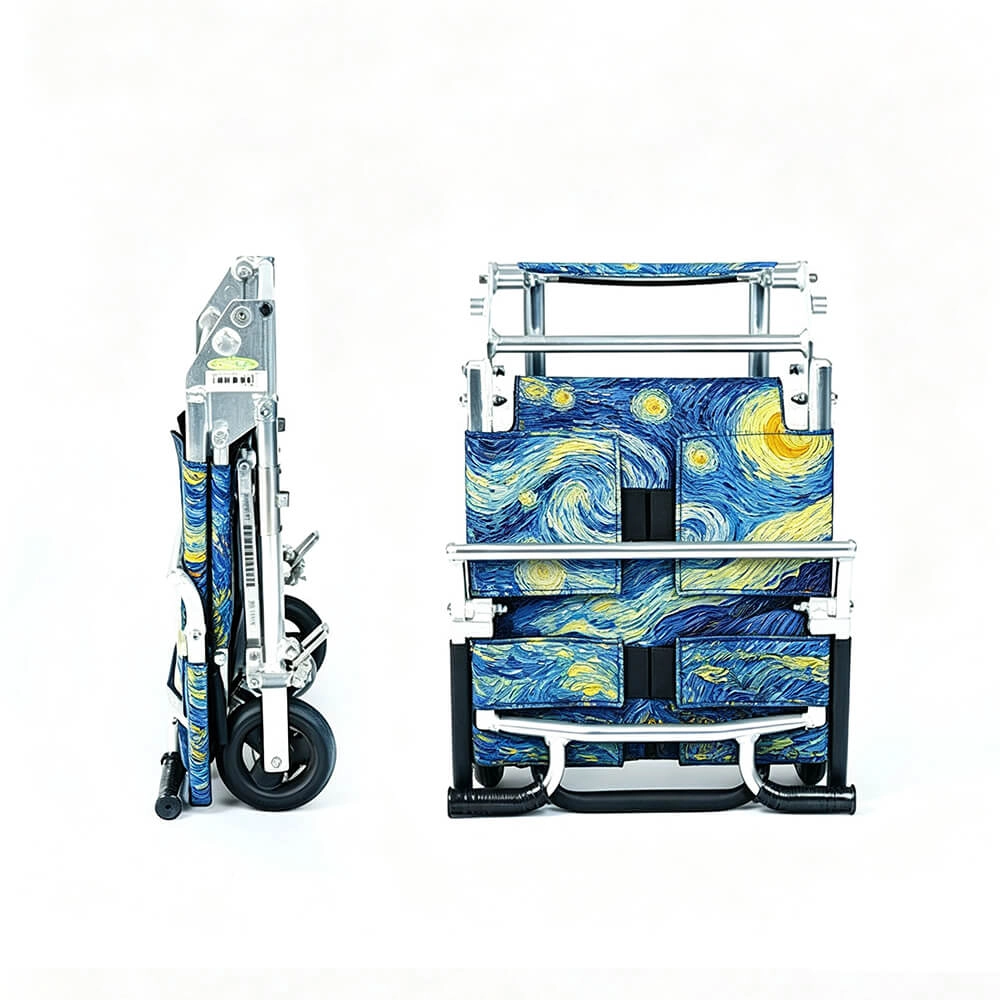
For B2B buyers, medical equipment distributors, and procurement professionals, custom foldable wheelchairs represent a unique intersection of portability and personalization. While folding wheelchairs are the most popular mobility aid globally due to their convenience and storage efficiency, standard off-the-shelf models often fail to meet the specific anatomical needs of individual users. Custom foldable wheelchairs bridge this gap—offering the compact, travel‑friendly design of a folding frame with the tailored fit and performance of a custom‑built chair. This comprehensive guide explores everything you need to know about sourcing custom foldable wheelchairs in 2026.
A custom foldable wheelchair is a mobility device that combines the collapsible X‑frame or scissor‑mechanism of a traditional folding wheelchair with personalized measurements, material choices, and feature configurations. Unlike rigid custom wheelchairs, which have a fixed welded frame, custom foldable wheelchairs retain the ability to fold laterally for storage and transport—yet every dimension, from seat width and depth to backrest height and front caster angle, is adjusted to fit the user’s unique body shape, weight distribution, and lifestyle requirements.
This category serves a growing demographic: active users who travel frequently, live in small apartments, or rely on caregivers to transport their chair, but who also demand the postural support, pressure relief, and propulsion efficiency that only a custom‑fitted device can provide. Modern manufacturing techniques, including advanced welding, precision CNC machining, and lightweight alloys, now allow custom folding frames that are as robust and durable as their rigid counterparts.
Custom foldable wheelchairs offer a compelling value proposition for both end‑users and B2B distributors:
Unmatched Portability with Personalized Fit: Users no longer have to choose between a chair that fits them perfectly and one that fits in a car trunk. Custom folding chairs collapse into compact dimensions—often under 30 cm in width when folded—while still accommodating individual body geometry, reducing the risk of pressure sores and improving overall comfort.
Versatility Across Use Cases: These wheelchairs are ideal for users who split their time between home, work, and travel. They are equally suited for daily community use, airport transfers, and cruise ship excursions. For caregivers, the lightweight design (often under 12 kg for aluminum custom models) makes lifting and loading effortless.
Enhanced Propulsion Efficiency: While folding frames do have more moving parts than rigid frames, custom‑designed folding geometries—such as optimized cross‑brace angles and reduced seat‑to‑floor heights—can significantly improve energy transfer. Advanced custom folding chairs use high‑grade bearings and low‑friction pivot points to minimize the energy lost during folding and propulsion.
Durability and Longevity: With proper material selection (e.g., 7000‑series aluminum or carbon fiber) and precision welding, custom folding chairs can match the lifespan of rigid chairs. Fewer compromises in material quality mean that folding mechanisms withstand years of daily folding without loosening or warping.
Custom foldable wheelchairs offer a broad spectrum of personalization, often exceeding what is available for standard folding models. Key customizable elements include:
Frame Dimensions and Geometry: Seat width (typically 16–22 inches), seat depth, backrest height, and front seat‑to‑floor distance can all be tailored. Some manufacturers offer adjustable center‑of‑gravity positions to fine‑tune balance and push‑resistance.
Frame Materials: Aluminum alloys (6061 or 7005 series) remain the most popular choice for a balance of weight, strength, and cost. Carbon fiber is available for ultra‑lightweight premium models, reducing total weight to under 8 kg even with folding mechanisms. Titanium frames, though rarer in folding designs due to cost, offer superior vibration dampening and fatigue resistance.
Folding Mechanism Engineering: Beyond the standard scissor fold, custom designs can incorporate quick‑release axles, one‑hand fold triggers, or even automatic folding actuators for powered versions. The type of locking mechanism and its placement can be adjusted to suit user dexterity.
Seating and Positioning: Custom contoured cushions, pressure‑relief foam, and adjustable backrests with tension straps or rigid shells are all available. For users with complex postural needs, custom orthotic seating inserts can be integrated.
Aesthetic and Branding: Color options, anodized finishes, custom decals, and logo embroidery on upholstery allow B2B buyers to align products with their brand identity or end‑user preferences.
Accessories and Add‑ons: Detachable armrests, swing‑away or elevating leg rests, anti‑tip bars, transit wheels, and even battery packs for power‑assist systems can all be spec’d at the time of order.
The global wheelchair market is expected to reach approximately $6.11 billion in 2026, with folding models representing the largest volume segment. However, the “one‑size‑fits‑all” approach is losing ground. Industry reports consistently highlight a shift toward intelligent, lightweight, and customized solutions, as end‑users and healthcare providers increasingly recognize the long‑term cost savings and improved outcomes associated with proper fitting.
Demand is particularly strong in North America and Europe, where reimbursement policies increasingly favor custom seating and complex rehab technology. In Asia‑Pacific, rising disposable incomes and growing awareness of post‑care health are fueling interest in mid‑range custom folding chairs, especially for the elderly population. The self‑propelled manual wheelchair segment, which includes most folding designs, is projected to grow from $6.2 billion in 2025 to $9.6 billion by 2032, with custom options capturing a growing share of that growth.
For B2B distributors, offering custom foldable wheelchairs provides a competitive edge over suppliers who only stock standard sizes. It also opens the door to government tenders and institutional contracts that often require tailored solutions for patients with specific needs.
China remains the undisputed leader in wheelchair manufacturing, producing approximately 60% of the world’s wheelchairs across more than 70 active factories. For custom foldable wheelchairs, Chinese suppliers offer several distinct advantages:
Cost Efficiency with Flexibility: Factory‑direct pricing for custom folding wheelchairs is significantly lower than Western or Japanese competitors—often 30–50% less for comparable specifications. This allows distributors to offer custom options at price points that are accessible to a broader customer base.
OEM and ODM Capabilities: Chinese manufacturers excel at private‑label production and design modifications. Whether you need a specific seat width, a custom color, or an entirely new folding mechanism, experienced factories can accommodate your requirements. The typical lead time for a custom folding wheelchair order ranges from 4 to 8 weeks for OEM configurations, and 8 to 12 weeks for full ODM (new design) development.
Integrated Supply Chains: Leading factories in Guangdong, Jiangsu, and Fujian have complete in‑house capabilities—from extrusion and welding to painting and assembly—reducing delays and ensuring quality control at every step.
Regulatory Compliance: Reputable Chinese manufacturers hold ISO 13485 (medical devices), CE marking for Europe, and FDA registration for the US market. Always verify certifications and request compliance test reports for structural strength, stability, and flammability.
The cost of custom foldable wheelchairs varies widely based on materials, extent of customization, and order volume. As a general guide for B2B buyers (factory‑direct, FOB China):
Standard Aluminum Custom (12–16 kg): $130 – $300 per unit (adjustable seat width, armrests, leg rests)
Lightweight Aluminum Custom (10–13 kg): $250 – $450 per unit (higher‑grade alloy, optimized folding geometry)
Carbon Fiber Custom (under 9 kg): $550 – $1,200 per unit (premium, ultra‑light, with advanced ergonomic seats)
Custom Folding Power Wheelchairs (entry): $500 – $900 per unit (with folding frame and lithium battery)
For orders of 100 units or more, additional discounts of 5–15% are common. Custom branding and packaging are often included at no extra charge for volume orders.
When evaluating potential manufacturing partners, B2B buyers should prioritize:
Design and Engineering Capability: Can the supplier modify frame geometry, fold mechanisms, and seating attachments? Request case studies or CAD examples of previous custom projects.
Material Quality Assurance: Ask for material certificates (mill test reports) and weld inspection records. Inspect sample units for smooth folding operation, consistent gap tolerances, and sturdy locking mechanisms.
Certification and Compliance: ISO 13485 and CE are mandatory for medical devices in most markets. FDA listing is required for US imports. Ensure documentation is current and verifiable.
Sample Policy: Always order physical samples for independent testing. Test folding/unfolding cycles (at least 500 cycles), stability with load, and component durability.
Scalability and Lead Times: Confirm production capacity and their ability to ramp up during peak seasons. Ask about their raw material inventory levels to avoid supply chain delays.
After‑Sales Support: Warranty terms (typically 1–3 years on frame), spare parts availability, and responsive technical support are critical for long‑term partnerships.
Distributors should help their clients decide based on lifestyle: Custom rigid chairs are superior for daily active use where performance and energy efficiency are paramount. Custom foldable chairs, however, are the go‑to choice for users who prioritize transportability, shared household storage, or frequent travel. Many users own both—a rigid chair for daily outings and a folding chair for trips. Offering both lines positions your business as a comprehensive mobility solution provider.
At Elesmart, we bring over 25 years of experience in medical equipment manufacturing to every custom folding wheelchair project. Our ISO‑certified facilities and dedicated engineering team work closely with B2B clients to deliver foldable wheelchairs that combine innovative folding mechanisms with precise anatomical fitting. Whether you need a high‑volume run of aluminum custom chairs for a government tender or a boutique line of carbon fiber designs for a premium retail brand, Elesmart offers flexible OEM/ODM services, competitive pricing, and reliable global shipping.
We take pride in our rigorous quality control, on‑time delivery, and responsive communication—ensuring that your custom foldable wheelchair program runs smoothly from sample approval to container loading.
Contact Elesmart Today
For detailed quotations, product catalogues, and custom sample requests:
Email: info@elesmart.com
Mobile: +86 13685249056
Our professional B2B team is ready to discuss your specific requirements and help you capture the growing demand for custom foldable wheelchairs in 2026 and beyond. Reach out now—let’s build the perfect folding solution together.


